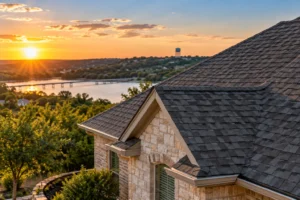
If you own a home in Central Texas, one question eventually becomes impossible to ignore: how long does a roof last in Belton? The short answer is that many asphalt shingle roofs last around 15 to 30 years, while metal roofing can often provide 40 to 70 years or more of service. But those numbers are only starting points. Texas heat, relentless sunlight, hail, wind, installation quality, ventilation, and maintenance can all push a roof toward either end of its expected lifespan.
That matters because roofs rarely fail on a neat schedule.
A 17-year-old roof could still be performing well, while a poorly installed 10-year-old roof may already be developing problems. Rather than focusing only on the date the roof was installed, Belton homeowners should look at age, material, storm exposure, and actual condition together.
Here is what you need to know.
Average Roof Lifespan in Belton by Material
When homeowners ask how long does a roof last in Belton, roofing material is usually the best place to begin.
Different materials age at very different rates.
| Roofing Material | Typical Lifespan | Key Belton Considerations |
|---|---|---|
| 3-tab asphalt shingles | 15–20 years | Heat, UV exposure and storms may accelerate aging |
| Architectural shingles | 20–30 years | Better durability than basic shingles |
| Premium asphalt shingles | 25–40 years | Higher quality, but still susceptible to hail |
| Metal roofing | 40–70+ years | Long lifespan when properly installed |
| Clay or concrete tile | 50+ years | Durable, though individual tiles may break |
| Synthetic roofing | 30–50+ years | Varies considerably by product |
These are estimates rather than expiration dates.
A properly installed architectural shingle roof with good ventilation and routine maintenance could outperform expectations. The same product installed poorly, repeatedly struck by hail, or subjected to excessive attic heat may deteriorate much sooner.
That’s why understanding the roof lifespan in Belton means looking beyond the number printed on a manufacturer’s brochure.
How Long Do Asphalt Shingle Roofs Last in Belton?
Asphalt shingles remain one of the most familiar roofing choices for Texas homes because they are relatively affordable, widely available, and easy to repair.
For most homeowners asking how long does a roof last in Belton, asphalt shingles will therefore be the most relevant category.
Basic three-tab shingles might last roughly 15 to 20 years under typical conditions. Architectural shingles can often provide around 20 to 30 years, while certain premium products may last longer.
There is an important catch.
A product marketed as a “30-year shingle” should not automatically be expected to look and perform like new for exactly 30 years. Real-world weather conditions matter enormously.
Belton roofs face several sources of stress:
- Strong Texas sunlight
- High summer temperatures
- UV exposure
- Sudden temperature changes
- Hailstorms
- Strong winds
- Heavy rainfall
- Falling branches and debris
Over many years, those conditions gradually wear down asphalt shingles.
The protective granules on the surface can loosen. Shingles may become brittle. Edges can curl. Cracks can develop.
Once deterioration becomes widespread, continuing to patch individual areas may stop making financial sense.
Why Texas Heat Can Reduce Roof Lifespan
Heat doesn’t usually destroy a roof overnight.
It works slowly.
During hot periods, the surface of a dark asphalt roof can become substantially hotter than the outdoor air. Day after day, roofing materials heat up, expand, cool down, and contract again.
That repeated movement adds stress.
Over time, shingles may become less flexible and more vulnerable to cracking, especially as the roof gets older.
UV radiation adds another layer of wear. Prolonged sunlight gradually breaks down roofing materials, which can contribute to brittleness and deterioration of the asphalt components.
Attic conditions matter too.
If a roof system does not have adequate ventilation, heat can become trapped underneath the roof deck. That can create additional stress on shingles from below while making the attic hotter than necessary.
For homeowners wondering how long does a roof last in Belton, attic ventilation is one of those easily overlooked details that can make a meaningful difference over the life of the roofing system.
Hail Can Change the Equation Quickly
Age isn’t the only enemy.
A severe hailstorm can significantly affect a roof that was otherwise expected to last many more years.
Hail damage to asphalt shingles may include:
- Knocked-off surface granules
- Bruising
- Cracks
- Exposed asphalt
- Damage around vents or flashing
- Fractures within the shingle material
Some damage is obvious from the ground.
Much of it isn’t.
A homeowner may look outside after a storm, see all the shingles still in place, and assume the roof escaped unharmed. Yet impact damage can weaken the roofing surface without immediately creating a visible leak.
That’s one reason a roof inspection after substantial hail can be valuable.
Water penetration may not begin immediately. Damage can instead accelerate deterioration, making the roof more vulnerable during later storms.
Metal roofs generally handle weather exceptionally well, but hail can affect them too. Depending on the type and severity of impact, damage can include denting or harm to coatings, seams, flashing, and other components.
No roofing material is completely immune.
Strong Winds Can Shorten the Life of Belton Roofs
Wind creates a different type of stress.
It tries to lift roofing materials away from the structure.
When shingles are properly installed and well sealed, they are designed to resist considerable wind. But older shingles can lose flexibility and adhesion, increasing their vulnerability during strong storms.
Wind-related roofing problems may include:
- Lifted shingles
- Torn shingles
- Missing shingles
- Damaged ridge caps
- Loose flashing
- Exposed underlayment
A few missing shingles might appear to be a minor problem.
Sometimes they are.
But once water can reach vulnerable areas beneath the roof covering, damage may spread to decking, insulation, ceilings, and interior finishes.
Prompt repairs can often prevent a small wind-damage problem from becoming a much larger one.
Installation Quality Has a Major Impact on Roof Life
A premium roofing product cannot compensate for poor installation.
This is one of the most important points homeowners should understand when estimating how long does a roof last in Belton.
Roofing systems contain many interconnected components. Shingles or metal panels are only the most visible layer.
A good installation also depends on details such as:
- Underlayment
- Flashing
- Fastening patterns
- Roof penetrations
- Valleys
- Drip edges
- Ridge components
- Ventilation
Small installation errors can produce big problems years later.
Poorly installed flashing around a chimney, for example, might allow repeated moisture intrusion even though the surrounding shingles remain perfectly functional.
Incorrect fastening can leave shingles more vulnerable to wind.
Improper ventilation can expose the roof to excessive heat and moisture.
Quality workmanship matters from day one.
Signs Your Roof May Be Reaching the End of Its Life
Aging doesn’t necessarily mean failure.
Condition is what counts.
If your roof is approaching the typical lifespan for its material, pay closer attention to changes in appearance and performance.
Common warning signs include:
- Curling or cupping shingle edges
- Cracked shingles
- Missing shingles
- Bald spots where granules are gone
- Heavy granule accumulation in gutters
- Repeated flashing problems
- Rust or corrosion on metal components
- Water stains on ceilings
- Moisture in the attic
- Sagging roof areas
- Repeated leaks
- Increasing repair frequency
One damaged shingle does not mean you need a new roof.
Widespread deterioration is different.
If large areas of the roof are aging at the same time, replacing individual shingles may simply move the next repair a few feet down the roof.
How Do You Find Out How Old Your Roof Is?
Knowing the installation date makes planning much easier.
Start with your own paperwork.
If you purchased the home recently, check seller disclosures, inspection reports, closing documents, warranties, or invoices left by the previous owner.
You may also be able to find relevant permit information, depending on what records exist.
No paperwork?
A roofing professional may still be able to provide a rough age estimate based on material type, wear patterns, installation style, and overall condition.
The estimate won’t be as precise as an invoice dated June 2011, of course, but it can still help you determine whether you’re dealing with a relatively young roof or one entering its later years.
Roof Repair vs. Replacement in Belton
This is where homeowners often hesitate.
Repair is cheaper than replacement, so repairing always seems attractive. But the least expensive decision today is not necessarily the least expensive decision over the next several years.
Repair Often Makes Sense When:
- The roof is relatively young.
- Damage is confined to a small area.
- Only a few shingles are missing.
- One flashing detail is causing the leak.
- The roof deck remains sound.
- Most of the roofing surface remains in good condition.
Replacement May Make More Sense When:
- The roof is approaching the end of its expected lifespan.
- Shingle deterioration is widespread.
- Multiple leaks have developed.
- Repairs have become frequent.
- Large areas have severe granule loss.
- Significant storm damage affects multiple roof sections.
- Decking or other underlying materials are deteriorating.
Here is a practical way to think about it:
| Roof Condition | Repair or Replacement? |
|---|---|
| A few storm-damaged shingles | Repair often makes sense |
| Isolated flashing leak | Usually repair |
| Localized damage on a young roof | Usually repair |
| Widespread worn shingles | Replacement may be better |
| Numerous recurring leaks | Consider replacement |
| Older roof with major storm damage | Replacement may be more practical |
| Severe structural or decking problems | Requires professional evaluation |
Every roof is different.
The goal should be to spend money where it creates meaningful additional service life rather than repeatedly paying for temporary fixes.
When to Replace a Roof in Belton
There isn’t one magic age.
For homeowners researching when to replace a roof in Belton, the best decision usually comes from combining age with physical condition.
Suppose you have a 12-year-old architectural shingle roof with a single flashing leak. Repair could be completely reasonable.
Now consider a 24-year-old shingle roof with extensive granule loss, curled shingles, multiple past repairs, and another new leak.
That’s a different conversation.
As asphalt roofs move beyond roughly 15 to 20 years, it becomes increasingly helpful to keep a closer eye on their condition. Some roofs will still have years of useful service remaining.
Others won’t.
Storm history matters as well. A roof that has endured multiple serious hailstorms may age differently from a roof of the same age that has avoided major damage.
That’s why answering how long does a roof last in Belton always requires more than checking the calendar.
How Long Does a Metal Roof Last in Belton?
Metal roofing changes the math considerably.
A properly installed metal roofing system can often last 40 to 70 years or longer, depending on the specific material and system.
That’s a major advantage for homeowners planning to remain in their property for decades.
Metal roofing also performs well against several challenges common to Central Texas. It is resistant to many forms of weather-related deterioration and does not rely on a granular asphalt surface that slowly wears away.
Still, don’t interpret “long-lasting” as “maintenance-free.”
Metal roofs should periodically be checked for:
- Loose fasteners
- Failed sealants
- Flashing problems
- Scratches or coating damage
- Corrosion
- Seam issues
- Storm impact damage
Installation quality is especially important.
Metal roofs are systems, not just sheets of steel attached to a house. Details around seams, penetrations, flashing, ventilation, and expansion must all be handled correctly.
Can Routine Maintenance Make Your Roof Last Longer?
Yes.
Maintenance cannot turn a 25-year asphalt roof into a 50-year roof, but it can help prevent avoidable deterioration.
Some of the simplest steps are also the most useful.
Keep Gutters Clear
Clogged gutters can cause water to back up around roof edges and fascia. Clear them regularly, particularly when nearby trees shed leaves or debris.
Trim Overhanging Branches
Branches can scrape roofing materials and cause impact damage during storms.
Trees also drop leaves and organic debris onto roofs, especially in valleys.
Keep healthy clearance where practical.
Fix Small Problems Early
A loose piece of flashing is inexpensive compared with replacing rotten decking, wet insulation, and damaged drywall.
Don’t ignore leaks simply because they appear small.
Water is persistent.
Maintain Attic Ventilation
Good ventilation can help reduce excessive attic heat and moisture accumulation.
If the attic regularly feels unusually hot or shows signs of condensation, ventilation deserves attention.
Inspect After Major Storms
You don’t need to climb onto the roof yourself.
In fact, walking on a steep or damaged roof can be dangerous and may cause additional damage.
Instead, inspect from the ground where possible and arrange a professional assessment when severe hail, wind, or falling debris may have affected the roof.
How Often Should Belton Roofs Be Inspected?
For a roof in good condition, periodic inspections can provide useful early warnings.
A general professional inspection every year or two may be reasonable depending on the roof’s age, history, and condition. Older roofs may deserve closer monitoring.
Major storms are another trigger.
If Belton experiences significant hail or damaging winds, don’t necessarily wait until water starts dripping from the ceiling.
An inspection can identify problems while they are still limited.
I also recommend homeowners do simple ground-level checks occasionally.
Look for obvious changes:
- Are shingles missing?
- Are roof edges curling?
- Is flashing visibly displaced?
- Are gutters suddenly collecting large amounts of roofing granules?
- Are there new stains inside the attic or ceiling?
You don’t need to become a roofing expert.
You simply need to notice when something has changed.
How to Extend the Lifespan of a Belton Roof
Want to get the most from your roof?
Focus on prevention.
Use this checklist:
- Clean gutters and downspouts.
- Trim hazardous branches.
- Maintain attic ventilation.
- Repair damaged flashing promptly.
- Replace missing shingles.
- Investigate ceiling stains quickly.
- Keep roof valleys free of heavy debris.
- Inspect after severe storms.
- Avoid unnecessary foot traffic on roofing materials.
- Use quality replacement materials.
- Make sure repairs address the cause rather than just covering symptoms.
Routine attention isn’t glamorous.
It works.
A roof that receives timely repairs and proper maintenance has a better opportunity to reach its expected service life than one ignored until major problems become obvious.
Choosing a Long-Lasting Roofing Material in Belton
If replacement is approaching, longevity should be part of the conversation—but not the only consideration.
Asphalt shingles remain popular because they offer a practical balance of cost, appearance, availability, and performance.
Metal costs more upfront in many cases but can provide a significantly longer lifespan.
Your decision may depend on:
- Budget
- How long you expect to own the property
- Roof design
- Neighborhood appearance
- Maintenance preferences
- Energy-efficiency goals
- Storm-resistance priorities
There is no universally perfect roofing material.
There is a better fit for each home.
An experienced Belton roofer can help explain how different products perform on your specific roof rather than relying solely on generic lifespan claims.
Questions to Ask Before Repairing or Replacing Your Roof
Good decisions start with good questions.
Before approving major Belton roofing work, ask:
- How old do you estimate my roof is?
- Is the damage localized or widespread?
- How much service life likely remains?
- Is the roof decking still sound?
- Are there ventilation problems?
- Is flashing contributing to the issue?
- Would repairing this problem meaningfully extend the roof’s life?
- Which materials are appropriate for Belton conditions?
- What warranties apply?
- What maintenance will the new roofing system require?
Clear answers make it easier to compare repair and replacement on something more useful than price alone.
Frequently Asked Questions
How long does a roof last in Belton, Texas?
For many homes, asphalt shingle roofs last roughly 15 to 30 years, while metal roofs may last 40 to 70 years or more. Actual lifespan depends on material quality, installation, ventilation, maintenance, and storm exposure.
How long do asphalt shingles last in Belton?
Basic asphalt shingles may last around 15 to 20 years, while architectural shingles can often reach 20 to 30 years. Severe heat, hail, wind, or installation problems can shorten that lifespan.
Does Texas heat damage roofs?
Long-term heat and UV exposure can accelerate roofing deterioration, particularly with asphalt shingles. Proper attic ventilation and quality installation can help reduce unnecessary stress.
Can hail shorten the life of my roof?
Yes. Hail can dislodge granules, bruise or crack shingles, and damage other roofing components, potentially reducing the roof’s remaining useful life.
Does one roof leak mean I need a replacement?
Not necessarily. A localized leak caused by flashing or minor damage may be repairable, especially on a younger roof.
Should I replace a 20-year-old roof?
Not automatically. A 20-year-old roof should be evaluated based on material, condition, storm history, leaks, granule loss, and previous repairs.
How long does a metal roof last in Belton?
Many properly installed metal roofing systems can last 40 to 70 years or longer. Maintenance, coating condition, storm exposure, and installation quality still matter.
How often should I inspect my roof?
Periodic inspections every year or two can be useful, with additional inspections after significant hailstorms, strong winds, or other potentially damaging weather.
Can roof maintenance really extend its lifespan?
Maintenance can help prevent premature deterioration by identifying leaks, flashing issues, debris buildup, drainage problems, and storm damage before they become more serious.
What is the best roofing material for Belton homes?
There is no single answer. Asphalt shingles offer an accessible upfront cost and broad versatility, while metal roofing generally offers greater longevity. The right choice depends on your home, budget, and long-term plans.
So, How Long Does a Roof Last in Belton?
The practical answer to how long does a roof last in Belton is somewhere between “it depends” and “longer if you take care of it.”
Asphalt shingle roofs commonly provide roughly 15 to 30 years of service. Metal roofing can last several decades longer. But neither material exists in a laboratory.
Your roof lives outside.
It faces intense Texas sunshine, heat, wind, hail, rain, falling debris, and thousands of daily heating and cooling cycles. Installation quality and maintenance determine how well it handles those conditions.
If your roof is approaching its expected lifespan, don’t panic and don’t automatically replace it.
Start with its condition.
Look for widespread wear, recurring leaks, missing materials, storm damage, and other signs that repairs are becoming less effective. A professional Belton roofing inspection can help determine whether your roof still has years of useful life ahead or whether replacement should move higher on your home-maintenance list.
Ultimately, the best time to think about your roof isn’t when water is already dripping into the living room.
A little planning goes a long way!